I have mixed feelings about this book. On one hand, it broaches a lot of difficult topics we tend to shy away from, especially if our personal opinion isn’t a popular one—premarital sex, traditional marriage, women priests. These are topics we have to learn about, and not just from the media. We need to gather information from all sides, and learn for ourselves what’s truly right and wrong. The “mixed” part is, I don’t love the way the information is presented.
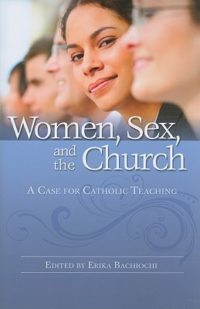 Most of the time, I felt I was reading someone’s dissertation. There’s an introduction, an explanation of the popular opinion, and a conclusion of the opposing Catholic teaching. And a lot of footnotes. I’m not convinced the popular opinion was always accurate, either. It would explore the opinion of one person (whether it’s their book, or article, or something else) and claim the entire feminist view of that one topic is because of this one opinion. It used the farthest liberal examples, perhaps as a shock value (it was shocking), then explained its wrongness through the relevant Catholic teaching. It didn’t work for me.
But, the teachings are sound. I wish it had focused more on Scripture itself rather than simply trying to prove the popular opinion wrong. I wish the focus was more on Catholic teaching, as the subtitle suggests, rather than radical feminist teaching.
One essay I did like was on fertility. Even with this book being published nine years ago, it’s still a hot topic. The author of this passage went through infertility treatments herself, and speaks from a place of knowledge and experience. I learned more about both IVF and NaPro than I ever thought I’d know. The essay on the priesthood was also interesting, though for a different reason. The answer to “why no women priests?” can essentially be boiled down to “That’s just how it’s always been,” even if the real root of “always” begins with Jesus Christ himself (he had only men as apostles, after all). I’m not sure that was explained the best way it could.
I’d like to read more on these subjects, in a less dissertation-style fashion. This collection isn’t inherently bad, but got too political for me at times. Perhaps I should’ve read John Paul II’s On the Dignity and Vocation of Women first. (No, I haven’t read it yet!) I know what the public opinions are—I want to read the Church’s teachings, rather than a mere comparison to the alternative.