
Most Christians don’t have the first idea about Judaism, because we’re taught to dismiss it. Jews are “wrong,” lost souls in need of conversion. Or, the Old Testament is a bunch of old, obsolete rules.
None of that is true, and Our Father Abraham beings to explain why.
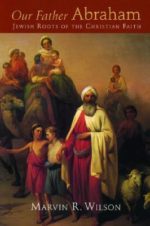 I took pages and pages of notes—on Abraham, the early Church, the Jewishness of Jesus. On St. Paul, the converted Pharisee. This book is respectful to both sides, unbiased in presenting the facts. It admits when each side messed up, and they both messed up. But we can learn what happened, and start to fix it.
Christianity’s history is steeped in Judaism, and most don’t know it. It starts in the beginning, when Abraham—a non-Jew—was called to obey God. Little has changed since, for Jews and Christians. When God declared Abram a “father of nations” (Genesis 17:5), “nation” doesn’t just mean Israel. It doesn’t just mean the Jewish people. The Hebrew word is goyim, also translated as “Gentiles.” From the beginning, God included us all.
It delves into the history itself, and how Christianity broke off from its root. It goes into the theological differences between us, and stresses that we be respectful of each other despite them. It explores Jewish heritage and what the Hebrew Bible really teaches, and how Christianity has skewed that.
Jesus, his parents, and the apostles were practicing Jews. Jesus was well-versed in the Law, and celebrated the festivals (Sukkoth, Passover, Hanukkah). He used well-known Hebrew idioms in his sermons. Jesus never disregarded the religion, and we should live by example. But it’s not enough for Christians to just know about Judaism. It’s also our duty to live by its teachings, because that’s our history, too. Yes, we disagree on some major points. But at its root, Judaism is about divine love and love for one another. Jesus said so himself.
You shall love the Lord your God with all your heart, and with all your soul, and with all your mind. This is the great and first commandment. And a second is like it, You shall love your neighbor as yourself. On these two commandments depend all the law and the prophets.
—Matthew 22:37–40
A final observation: Throughout the Gospels, there’s much talk about the law and following the word of God. This is often interpreted as following the New Testament itself and the teachings of Jesus. But… at the time, there was no New Testament yet. Every single time they make reference to the faith, they’re talking about the Hebrew Bible. They’re referencing Mosaic Law. And that gives the Gospels a whole new meaning.

.JPG)