
• A Little Help From My [Book] Friends

    Sometimes we need a little nudge when it comes to prayer. It’s alarmingly easy to fall out of shape, going to bed feeling guilty and ignoring the Godly prodding that you haven’t spoken to Him, again. So, as with most things, I turn to books. I’ve found a few handy ones recently that now have a permanent spot at my bedside.

    God, I Have Issues, by Mark E. Thibodeaux
    Never before have I identified so strongly with a book title.

    This is a prayer guide for when you don’t know where to start. When you try to clear your mind and fail, or when you’re just not in the mood. It’s more a reference book, a categorical how-to based on mood. It covers the spectrum from elation to depression, and also offers a guide when you just don’t know how you feel.

    I like the way it’s set up. There’s a personal story or anecdote to start, and then it gets into accompanying Bible verses depending on the mood. It also makes you open up the Bible and read, offering relevant verses and follow-up reflection. I like it a lot. Because, God knows, sometimes I have issues.

    Jesus Calling, by Sarah Young
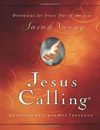
    This was gifted to me by a priest, when I came to him with innumerable questions about things he couldn’t answer (which is fairly typical of me). Instead, he handed me a copy of Jesus Calling and told me to read that day’s devotional. As things happen, that reading was just what I needed.

    A lot of people have issues with this series, because it’s written in second person. It’s like Jesus speaks directly to us, and it’s a big no-no to claim to speak for God. But… I like this perspective. It’s not the authentic and genuine Word, but it provides direction. It gives comfort. And each devotional is inspired by the Bible, so there are real truths in here.

    Some of the phrasing is weird, since it’s written from a modern perspective. But who am I to say He wouldn’t use some of the modern lingo to relate to us, like He did back then? It’s like having a little motivational speech from Jesus every day. I’m okay with that.


  • The Anxious Disciple

    When I first attended Mass at my local parish, I liked the pastor right away. I couldn’t explain why. He was serious and quiet, unlike the other priests I’d come to know. After Mass, he didn’t chat up everyone but simply shook their hands and thanked them for coming. As much as I need someone outgoing to counterbalance my introversion, I felt something of a kindred spirit. Of course, this means we barely spoke, not saying I wouldn’t have liked to.

    This week, he announced that he’s stepping down as pastor. Among other unnamed health issues, he notes in his parish letter that he struggles with anxiety and depression. As soon as I knew that, everything made so much more sense: The notecards for the homily. The quiet, post-Mass handshake. The eloquently-written emails, compared to the quiet in-person nature.

    It should’ve been obvious to me, but it’s often difficult to see in others the struggles you have yourself. Nothing would’ve changed, because I know me. I’d continue to offer a slight smile as I enter through a side door, even with flute in hand to play that Mass. I’d still sit at a different table for the few social events I’ve attended, because I don’t know how to talk to people like myself—more so those in some kind of authority position.

    But I can do the same thing he’s done all these years: Send an email. Introduce myself, albeit a little late, though he’ll understand why it took so long. I’ve always believed in the positivity of our struggles, even if they don’t make sense at the time. By admitting our faults, others are strengthened in knowing they’re not alone. I never felt that strength much from the side of one who’s struggling, but know it now as the faithful disciple. Nothing speaks of the glorious power of God as a 30-year priest struggling with the same things I have to face myself.

    When I was in Italy, my fellow pilgrims encouraged me to write a devotional. We came up with all sorts of atypical, off-the-wall ideas, but in the end kept it simple: Aiding others through my own struggles. Our weaknesses are not sinful or shameful; it’s because of them that we learn to trust God. And by sharing these experiences, others can learn and grow, too.

    Honestly, I haven’t gotten very far with that. Partly because it’s a daunting task, but mostly because it means stirring up those feelings. It’s easy to bury our supposed sins, thinking no one else feels or experiences this. But through Monsignor’s resignation, I’ve remembered brainstorming across the Italian countryside. I remembered my fellow pilgrim’s excitement over having a well-read convert in their midst. And, despite my continued reluctance, I remembered that I have work to do.

    I read the resignation letter several times. The more I did, the more I understood the depths of his sacrifice. Even more, I understood the overwhelming impact he had on his parish, despite his supposed weakness. Maybe, before he leaves, this quiet convert—who often hides behind a hymnal or her flute—can call on God’s strength to thank him. And maybe answer her own sacred calling, too.


And they said to him, “Inquire of God, we pray thee, that we may know whether the journey on which we are setting out will succeed.”

And the priest said to them, “Go in peace. The journey on which you go is under the eye of the LORD.”

—Judges 18:5–6

Categories