
• Perfectly Yourself


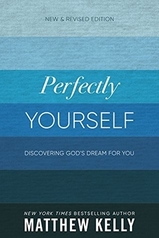
    I nabbed a copy of Perfectly Yourself at a local parish, who gave them away during Lent. I put off reading it for a little while, mostly because I was already reading so much during that time. But I also wasn’t completely ready to delve into the “best person I could be.”

    The guidelines in this book are fairly basic. It offers step-by-step instructions on self-improvement, including celebrating small victories, simplifying your life, and discovering what you love. These aren’t bad things, but this wasn’t the life-changing advice I anticipated. Perfectly Yourself reads more like a motivational speech rather than delving into Catholic principles.

    That in itself isn’t bad, but it’s not what I need at this point in my life. I’ve already tossed away everyone’s expectations of me to join to the Church. I’m not the target audience here. But it’s a good introduction to someone who needs those basics, or needs a good review of them.

    But I’m not saying I’m better than anyone else. I do need those reminders myself sometimes. After all, I still don’t know what to do now. There will always be more growing to do. But I wish this book was more God-centric. Much of it focuses on figuring out what we want. What our path is. There’s a section about helping others as well (as He commands us!), but a lot of it is what we can do for ourselves.

    Perhaps the moral of the story is, “Listen to God.” Throw away those societal/familial/whatever expectations, and rely on God to discover your own purpose. That’s something we all need, at all times, regardless of your life’s experiences or longevity or expectations.


  • Give us Your Weary

    We also offer you our fatigue this evening,
    because we are a bit tired
    from the various events of this day,
    as on many other days.
    We are content, Lord,
    to offer you this fatigue
    because it is our daily vesture.
    —Carlo Maria Martini, SJ

    I received a tiny prayer book on my retreat, something I vowed to return to after completing my Lenten studies. I’d honestly forgotten about it until three month later, searching through my desk drawers for something else. But in the lull of Ordinary Time, this seems a good time to start.

    This is an excerpt from a larger prayer introducing the book, and something I so often forget—offering our weaknesses to God.

    It seems such a mundane thing. What could He possibly do with my fatigue? With my mental and physical weariness? I can’t do anything with it. When I’m tired, I’m wiped out. And I feel tired a lot. The last thing I want to do is sit down in honest prayer, lethargic even to communicating with God. There are moments I’m too tired to find the words. I’ve even fallen asleep during prayer. This doesn’t seem all that worshipful, or respectful.

    But Jesus Christ himself desires this sacrifice of us.

    Come to me, all who labor and are heavy laden, and I will give you rest… for my yoke is easy, and my burden is light. —Matthew 11:28, 30

    He desires our fatigue and our weariness. Not our laziness. (That’s a different matter.) But we’re tired. We work, we struggle, and we fight. But as a result, we get worn down. It’s often too much for us to handle, but it’s never too much for Him.

    When I wake in the morning and don’t feel well-rested, offer that up to Him.
    When I stare at the piles of work and don’t want to tackle any of it, offer that up to Him.
    When I begin to feel the slump of mid-afternoon, offer that up to Him.
    When I just want to give up debating the same issues with a friend, offer that up to Him.

    Offer Him our fatigue. Our weaknesses. Our hopelessness.
    It may seem useless and meaningless.
    But anything we offer Him is not.


And they said to him, “Inquire of God, we pray thee, that we may know whether the journey on which we are setting out will succeed.”

And the priest said to them, “Go in peace. The journey on which you go is under the eye of the LORD.”

—Judges 18:5–6

Categories